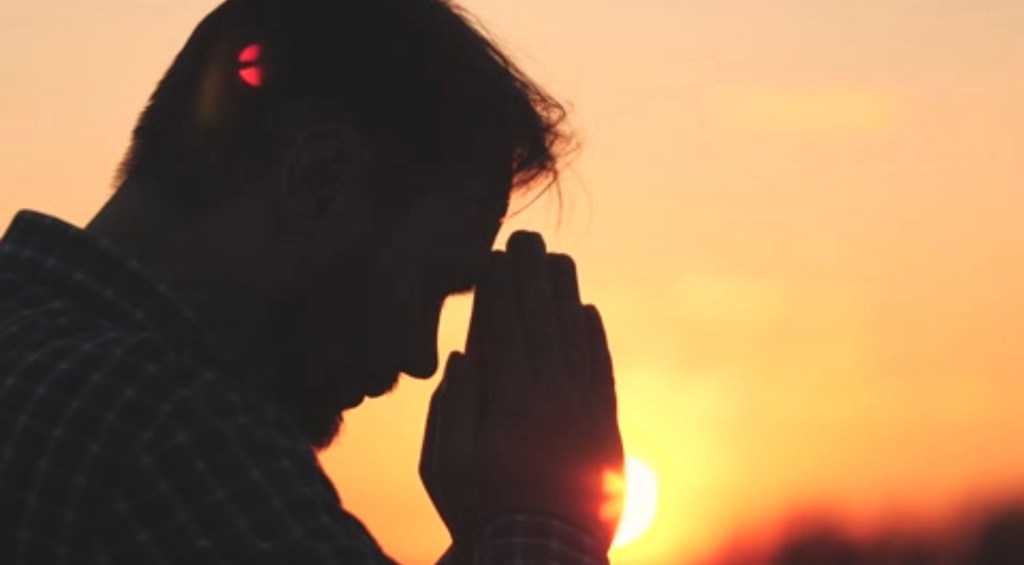
Nobody likes waiting. We live in a world built for speed — fast food, same-day delivery, instant answers. So when God tells us to wait, it can feel like a punishment. Like somehow we did something wrong and now we’re stuck in a holding pattern with no ETA in sight.
But waiting on God is never wasted time.
Isaiah 40:31 says it best: “But those who wait on the Lord shall renew their strength; they shall mount up with wings like eagles, they shall run and not be weary, they shall walk and not faint.”
Read that again. Waiting on God doesn’t drain you — it renews you. That’s not how the world works, but that’s exactly how God works.
Here’s the thing about waiting seasons — they’re not empty. They’re loaded. God is doing something in you that can only happen in the stillness. He’s building character. He’s removing what doesn’t belong. He’s aligning people, places, and opportunities that you can’t yet see from where you’re standing.
Joseph waited in a pit. Then a prison. Years went by. And then one day — not a moment too soon, not a moment too late — God elevated him to a palace. The waiting wasn’t a detour. It was the preparation.
Your waiting season is your preparation season.
Don’t despise it. Don’t rush it. Don’t try to manufacture what only God can produce. The promotion, the breakthrough, the healing, the restoration — it’s coming. But it has to come in His timing, not yours. Because His timing is always perfect, even when it doesn’t feel that way.
So while you wait — worship. While you wait — stay faithful. While you wait — keep your eyes on Him instead of the clock.
The wait is almost over. And what God has on the other side of it will be worth every single moment.
There are seasons where the work doesn’t stop, the needs don’t slow down, and your strength quietly runs thinner than you expected. You keep showing up. You keep pouring out. But somewhere inside, you feel the weight of it.
If you’ve been there—or if you’re there right now—you’re not alone.
God Sees the Weariness You Don’t Say Out Loud
Sometimes the hardest part of being strong is that people stop asking how you’re doing. You become the one others lean on, and your own weariness goes mostly unseen.
But Scripture reminds us that God never misses it.
“He giveth power to the faint; and to them that have no might he increaseth strength.” — Isaiah 40:29 (KJV)
Notice that—it’s not just for the weak in a general sense. It’s for the faint. The worn-down. The ones who have kept going longer than they thought they could.
God’s strength meets you right at the point of depletion, not after you’ve recovered.
Faithfulness Doesn’t Always Feel Strong
There’s a quiet misconception we carry sometimes—that if we’re really walking in faith, we should feel energized, confident, steady all the time.
But that’s not how Scripture describes it.
“Let us not be weary in well doing: for in due season we shall reap, if we faint not.” — Galatians 6:9 (KJV)
You don’t get a verse about not growing weary unless weariness is part of the journey.
Faithfulness often looks like continuing when your emotions aren’t cooperating. It looks like doing the next right thing when your strength feels small. It looks like trusting God’s promises more than your present feelings.
Jesus Understands the Weight of Continuing
When you look at the life of Jesus, you don’t see someone untouched by exhaustion or pressure. You see someone who kept withdrawing to the Father, again and again.
“And he withdrew himself into the wilderness, and prayed.” — Luke 5:16 (KJV)
Even Jesus stepped away to be renewed.
That tells us something important: continuing doesn’t mean pushing yourself endlessly without pause. It means staying connected to the source of your strength.
God Isn’t Asking You to Run on Empty
If you’ve been carrying more than you were meant to carry alone, this might be the gentle correction you need: God never asked you to sustain yourself.
“My grace is sufficient for thee: for my strength is made perfect in weakness.” — 2 Corinthians 12:9 (KJV)
Your weakness isn’t a failure—it’s an invitation. A place where God’s strength becomes visible in your life.
Sometimes the most spiritual thing you can do is admit, “Lord, I’m tired,” and let that be the doorway to His grace instead of something you try to hide.
A Simple Step Forward
Today, don’t focus on how far you still have to go. Just take the next faithful step.
Pause and be honest with God about where you are
Let Scripture speak strength back into your heart
Do the next thing He’s put in front of you—nothing more, nothing less
You don’t have to carry tomorrow today.
And you don’t have to do today alone.
God sees you. He sustains you. And He is not finished with you yet.
You’re in the middle of something heavy—stress, uncertainty, pressure—and it feels like it’s going to last forever. Not because it actually will, but because pain has a way of stretching time. Minutes feel like hours. Days feel like they stack without end.
But Scripture quietly reminds us of something powerful: what feels permanent is often just passing through.
Trouble Has an Expiration Date
The Bible doesn’t pretend problems aren’t real—but it consistently shows they are temporary.
“Weeping may endure for a night, but joy cometh in the morning.” — Psalm 30:5 (KJV)
That verse doesn’t deny the night. It just refuses to let the night have the final say.
Every storm you’ve ever seen—no matter how violent—eventually runs out of rain. It doesn’t ask your permission. It doesn’t care how it feels. It just… ends.
Your situation is no different.
God Works in Seasons, Not Stagnation
Life moves in seasons—just like creation.
“To every thing there is a season, and a time to every purpose under the heaven.” — Ecclesiastes 3:1 (KJV)
That means your struggle isn’t a permanent address—it’s a season. And seasons, by design, change.
Winter never asks you if you’re ready to move on—it just gives way to spring.
The same God who set that rhythm into nature has written it into your life.
Pressure Isn’t Permanent—But It Is Purposeful
Sometimes the hardest truth is this:
what feels like it’s breaking you is actually shaping you.
“For our light affliction, which is but for a moment, worketh for us a far more exceeding and eternal weight of glory.” — 2 Corinthians 4:17 (KJV)
“Moment” might not feel like a moment when you’re inside it—but compared to what God is building, it is.
Pressure in your life is like fire to gold—it doesn’t last forever, but it leaves something behind that does.
Don’t Build Your Identity Around a Temporary Problem
Here’s where people get stuck:
They go through something temporary…
and start believing it’s who they are.
A rough season becomes “my life is always like this” A failure becomes “I’m just a failure” A delay becomes “God forgot me”.
But that’s like calling a storm the climate.
It’s not accurate—and it’ll keep you stuck longer than the problem ever would.
Hold On—The Shift Is Coming
There’s a shift built into your story—even if you can’t see it yet.
“And let us not be weary in well doing: for in due season we shall reap, if we faint not.” — Galatians 6:9 (KJV)
“Due season” means there’s a set time for things to turn.
Not random. Not forgotten. Not overlooked.
Set.
Practical Takeaway
When the pressure hits this week, don’t just try to survive it—talk back to it:
“This is temporary. God is still working. And this will not last forever.”
Say it until your mind catches up with the truth.
Because problems are loud—but they’re also on a timer.
Some people tell themselves, “I’ll have peace when this settles down.”
When the bills are caught up. When the diagnosis is clearer. When the family tension eases. When the future feels less uncertain. When life gets back to normal.
But for many of us, “normal” keeps moving. One pressure gives way to another. One burden lifts, and another shows up in its place. If our peace depends on peaceful circumstances, then peace will always feel fragile and temporary.
Scripture points us to something deeper than that. God offers a peace that does not wait for ideal conditions. He gives peace that can live right in the middle of strain, delay, grief, and unanswered questions.
JESUS NEVER PROMISED A TROUBLE-FREE LIFE
Jesus spoke very honestly to His disciples. He did not prepare them for an easy road. He said, “In the world you will have tribulation; but be of good cheer, I have overcome the world” (John 16:33, NKJV).
That verse matters because it keeps us from chasing the wrong kind of peace. Jesus did not say, “You will avoid trouble.” He said, “You will have tribulation.” But in the same breath, He gave them a reason for courage and steadiness: He has overcome the world.
Biblical peace is not pretending that hard things are easy. It is not denial. It is not emotional numbness. It is not the absence of conflict, pain, or pressure.
Biblical peace is the settled confidence that Christ is with you, Christ is over you, and Christ will hold you steady in what you are walking through.
PEACE IS NOT FOUND IN CONTROL
A lot of our anxiety grows out of wanting everything to make sense before we can rest. We want the full plan. We want clear timing. We want to know how it is all going to turn out.
But peace does not come from finally controlling life. Peace comes from trusting the One who changes the things that you cannot change.
Philippians 4 says, “Be anxious for nothing, but in everything by prayer and supplication, with thanksgiving, let your requests be made known to God; and the peace of God, which surpasses all understanding, will guard your hearts and minds through Christ Jesus” (Philippians 4:6–7, NKJV).
Notice that Paul does not say peace comes when every problem disappears. He says peace comes as we bring everything to God. The promise is not that we will immediately understand everything. In fact, he says this peace “surpasses all understanding.”
That means there are moments when a believer can be under real pressure and still have real peace. Not because the situation is easy, but because God is near.
JESUS GIVES PEACE IN THE STORM, NOT ONLY AFTER IT
One of the clearest pictures of this is in the Gospels when the disciples were in the storm on the sea. The wind was fierce. The waves were filling the boat. The danger was real. And Jesus was there with them.
He spoke, “Peace, be still!” (Mark 4:39, NKJV).
Sometimes we read that story and focus only on the storm calming. But before the sea grew quiet, Christ was already present in the boat.
That is still true for the believer now. Sometimes God calms the storm quickly. Sometimes He does not. But His presence is not delayed until the situation improves. He is with His people in the middle of it.
You do not have to wait until life feels gentle to receive the peace of God.
A PEACEFUL HEART AND A PAINFUL SEASON CAN EXIST AT THE SAME TIME
That can be hard for us to accept. We tend to think peace and pain cannot live together. But often they do.
You may still be grieving and have peace.
You may still be waiting and have peace.
You may still be facing uncertainty and have peace.
You may still be carrying a burden and have peace.
Peace is not the proof that nothing hurts. Peace is the proof that God is sustaining you in what hurts.
Isaiah 26:3 says, “You will keep him in perfect peace, whose mind is stayed on You, because he trusts in You” (NKJV).
That verse does not point us to perfect circumstances. It points us to a fixed mind and a trusting heart. Peace grows where trust grows. When the mind keeps returning to God—His character, His promises, His faithfulness—the heart becomes steadier, even when life remains unsettled.
DO NOT MAKE PEACE ANOTHER FORM OF PERFECTIONISM
Sometimes we quietly place a condition on peace: “I can only be at peace if everything is handled the right way.”
But life in this world is rarely neat. There are loose ends. Delays. Imperfect decisions. Unfinished conversations. Problems you cannot solve in a day.
If you tie your peace to everything being resolved, you will live exhausted.
There is a better way. You can say, “This is not how I would have planned it. This is not easy. This is not ideal. But the Lord is here, and I will trust Him here.”
That is not weakness. That is mature faith.
GOD’S PEACE IS MEANT TO GUARD YOU
Paul says the peace of God will “guard your hearts and minds through Christ Jesus” (Philippians 4:7, NKJV). That word guard carries the idea of protection. God’s peace stands watch over the inner life.
Not every situation becomes peaceful instantly. But your heart does not have to become ruled by turmoil just because your circumstances are.
There are seasons when nothing around you feels settled, but something in you is being held by God. That is His work. That is His kindness. That is His peace.
A SIMPLE NEXT STEP
Today, stop telling yourself that peace has to wait.
Bring the real situation to God as it is. Name the burden honestly. Pray specifically. Open His Word. Fix your mind on who He is. Then choose to trust Him before the situation improves.
You may still be in a hard place. But you do not have to be without peace.
Because the peace of Christ was never meant to depend on perfect conditions. It was meant to rest on a perfect Savior.
Some of the hardest moments in life aren’t loud or dramatic—they’re slow. It’s the waiting room, the unanswered prayer, the season that seems to stretch longer than you expected. You’re doing your best to trust God, but if you’re honest, part of you keeps asking, “How much longer?”
Patience is one of those things we admire… until we actually have to live it.
GOD WORKS IN THE WAITING
Scripture doesn’t shy away from the reality of waiting. In fact, it leans into it:
“But they that wait upon the Lord shall renew their strength; they shall mount up with wings as eagles…” — Isaiah 40:31 (KJV)
Waiting isn’t wasted time in God’s hands. It’s often where He does some of His deepest work—not just in your situation, but in your heart.
We tend to think the goal is getting the answer, the breakthrough, the change. But God is just as concerned with who we are becoming while we wait. Patience grows something steady inside us that quick answers never could.
PATIENCE IS NOT PASSIVE
Sometimes patience gets mistaken for doing nothing. But biblical patience is active trust.
James writes:
“Be patient therefore, brethren, unto the coming of the Lord. Behold, the husbandman waiteth for the precious fruit of the earth, and hath long patience for it…” — James 5:7 (KJV)
A farmer doesn’t just sit back and ignore the field. He plants, waters, tends, and trusts the process he cannot control.
That’s what patience looks like in everyday life:
You keep praying, even when you don’t see results You keep doing what’s right, even when it’s hard You keep trusting God’s timing over your own.
Patience isn’t inactivity—it’s faith stretched over time.
THE TENSION WE FEEL IS REAL
Let’s be honest—waiting can feel frustrating, confusing, even discouraging. The Bible acknowledges that too:
“Hope deferred maketh the heart sick…” — Proverbs 13:12 (KJV)
There’s a real weight to delayed answers. God isn’t asking you to pretend it’s easy. He’s inviting you to bring that tension to Him instead of carrying it alone.
Patience doesn’t mean you never feel the struggle. It means you keep turning toward God in the middle of it.
GOD’S TIMING IS NOT RANDOM
One of the quiet anchors of patience is this: God’s timing is intentional.
“To every thing there is a season, and a time to every purpose under the heaven.” — Ecclesiastes 3:1 (KJV)
What feels like delay to us is often preparation in God’s plan.
He sees what we don’t:
The people being arranged.
The details falling into place.
The growth happening beneath the surface
If He moved as quickly as we wanted, we might step into something we’re not ready to carry yet.
A SIMPLE WAY TO PRACTICE PATIENCE TODAY
Patience isn’t built all at once—it grows in small, daily choices.
Here’s a simple place to start:
When you feel the pressure of waiting today, pause and pray this honestly:
“Lord, I don’t like waiting—but I trust You are working. Help me stay faithful right here.”
Then take one small step of obedience:
Send the message.
Do the work in front of you.
Choose peace over worry.
Let patience become something you practice, not just something you hope to have.
Waiting seasons don’t last forever. But what God builds in you during them will.
And one day, you’ll look back and realize—He wasn’t late.