Walking in the Light

The path of discipleship is rarely dramatic; it’s a quiet, steady walk shaped by daily choices. Scripture describes this journey as walking in the light—living with clarity, honesty, and a heart aligned with God’s ways. The light doesn’t just reveal where to step; it transforms the one who follows it.

John’s words are foundational: “If we walk in the light, as he is in the light, we have fellowship one with another” (1 John 1:7). Walking in the light is not merely moral clarity—it’s relational clarity. It strengthens unity, reduces hiddenness, and anchors fellowship in truth. Light naturally exposes what darkness hides, yet Scripture presents this exposure as healing rather than harsh.

Psalm 119 reinforces how the Word guides this walk: “Thy word is a lamp unto my feet, and a light unto my path” (Psalm 119:105). Lamps of the ancient world didn’t illuminate miles ahead; they lit only the next step. Discipleship works the same way. God shapes the journey one obedient moment at a time, building a stronger neural pathway for faithfulness with each decision.

Paul’s counsel to the Ephesians brings a practical edge: “Walk as children of light” (Ephesians 5:8). This walk involves discernment—choosing what aligns with truth and stepping away from what dims spiritual clarity. He adds, “See then that ye walk circumspectly, not as fools, but as wise” (Ephesians 5:15). Wisdom keeps the believer aware, alert, and intentional.

Jesus describes discipleship as a path where “he that followeth me shall not walk in darkness” (John 8:12). Light is not something the disciple produces—it is something received. It becomes a steady direction, not dependent on feelings or circumstances.

Walking in the light doesn’t remove difficulty, but it removes aimlessness. It turns the ordinary steps of life into a deliberate journey shaped by truth, clarity, and consistent obedience.

Takeaway: Discipleship grows through steady, daily steps in the light, guided by Scripture and grounded in truth.

— Terrence Burton

Strengthened in the Inner Man

Every believer faces moments where outward circumstances feel heavier than inward strength. Paul understood this tension well, and his epistles often point us toward a deeper well of spiritual resilience—one built not on emotion, but on the steady work of God within.

In Ephesians, Paul prays that believers would be “strengthened with might by his Spirit in the inner man” (Ephesians 3:16). That phrase captures something essential: true endurance begins where no one else can see. Outward pressures may push hard, but inner renewal keeps the soul steady. The Spirit forms a grounded stability that circumstances cannot easily shake.

Paul echoes this again when he writes, “Though our outward man perish, yet the inward man is renewed day by day” (2 Corinthians 4:16). Renewal isn’t occasional—it’s continual. Just as the body requires daily sustenance, the inner life requires ongoing attention through Scripture, prayer, and quiet moments of realignment. These daily practices form a strong neural pathway of dependence on God rather than on shifting emotions or external conditions.

Colossians adds another layer by reminding believers to “set your affection on things above, not on things on the earth” (Colossians 3:2). Strength in the inner man grows when the mind is lifted beyond temporary frustrations and anchored in eternal realities. Even in difficulty, the believer can walk with clarity because the heart is tethered to truth.

Peter reinforces this inward focus, describing “the hidden man of the heart,” which is “in the sight of God of great price” (1 Peter 3:4). God values what cannot be polished or faked—the quiet character formed through trust and endurance. That unseen strength becomes a stabilizing force, shaping how we respond to pressure, temptation, and uncertainty.

Takeaway: Inner strength is cultivated daily by the Spirit, forming a steady resilience that stands firm regardless of outward circumstances.

— Terrence Burton

When the Lord Directs Your Path

When Scripture speaks of God’s guidance, it does not describe a loud command but a steady, faithful leading. His direction is often quiet, yet unmistakable to the heart that listens.

The psalmist declares, “He leadeth me beside the still waters” (Psalm 23:2, KJV), reminding us that divine direction begins with divine peace. God does not rush His people; He steadies them. The prophet Isaiah echoes this assurance: “Thine ears shall hear a word behind thee, saying, This is the way, walk ye in it” (Isaiah 30:21). Guidance is not merely about where to go but about whom we follow.

David also writes, “The steps of a good man are ordered by the Lord” (Psalm 37:23). God’s ordering is not mechanical; it is relational. It forms a neural pathway of trust as we learn to walk with Him daily. The early church lived this truth when the Spirit redirected Paul away from Asia and toward Macedonia (Acts 16:6–10). Even closed doors are part of His leading.

For those seeking the will of God today, Scripture gives a clear starting point: “In all thy ways acknowledge him, and he shall direct thy paths” (Proverbs 3:6). Guidance is not primarily about signs—it is about submission. When we yield our plans, desires, and timing, God aligns our steps with His purpose.

Takeaway: God guides those who walk with Him, one obedient step at a time.

— Terrence Burton

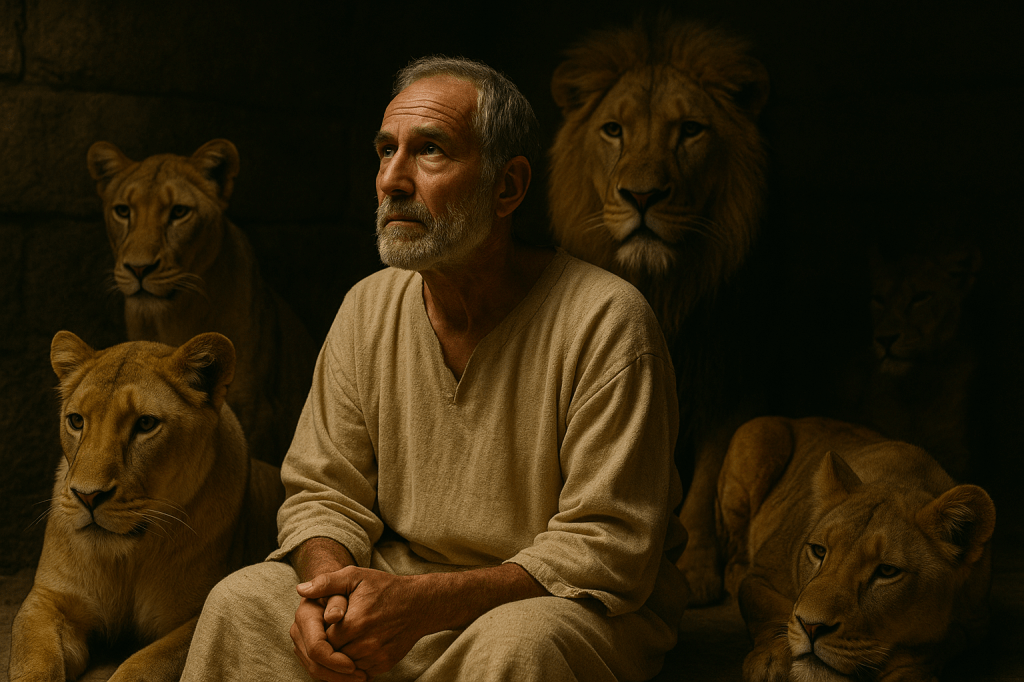
Standing Firm in a Shifting Culture: Daniel’s Example

Faithfulness rarely announces itself with noise. It shows up in the quiet places—behind closed doors, in daily disciplines, and in those moments when compromise seems easier than conviction. Daniel’s life reflects this kind of unwavering devotion.

Daniel’s steadfastness began long before the lions’ den. His consistent prayer life, integrity in leadership, and refusal to bend under cultural pressure all flowed from a heart anchored in God. Scripture paints him as a man who purposed in his heart (Daniel 1:8, KJV), meaning his convictions were settled long before they were tested.

His example in Babylon is particularly striking because he remained faithful in an environment bent against the God of Israel. He interpreted dreams under pressure (Daniel 2:19–23), confronted kings with truth (Daniel 5:22–28), and continued praying even when it became illegal (Daniel 6:10). Each episode shows a life that trusted God more than consequences. Daniel walked with a quiet boldness rooted in the assurance that “the most High ruleth in the kingdom of men” (Daniel 4:17, KJV). This truth shaped every decision he made.

The lions’ den is often remembered as the climax, yet it is simply the result of a lifetime of steady obedience. God shut the lions’ mouths (Daniel 6:22), but Daniel had long shut the door to fear and compromise. His life challenges us to cultivate the same steady devotion—faith built through daily habits, Scripture meditation, and unwavering trust in the Lord’s sovereignty. His story reminds believers that courage isn’t found in a moment; it’s formed in the quiet consistency of a surrendered life, upheld by the God who delivers.

Takeaway: Faithfulness in small, unseen moments prepares the soul to stand firm when the testing comes.

-Terrence Burton