When God Interrupts the Ordinary

Every move of God in the Gospels begins with a simple invitation: follow. That word reshaped ordinary lives—fishermen, tax collectors, and seekers alike—pulling them into a story far larger than their daily routines. The call still reaches across time with the same purpose: to draw hearts into obedience, trust, and transformation.
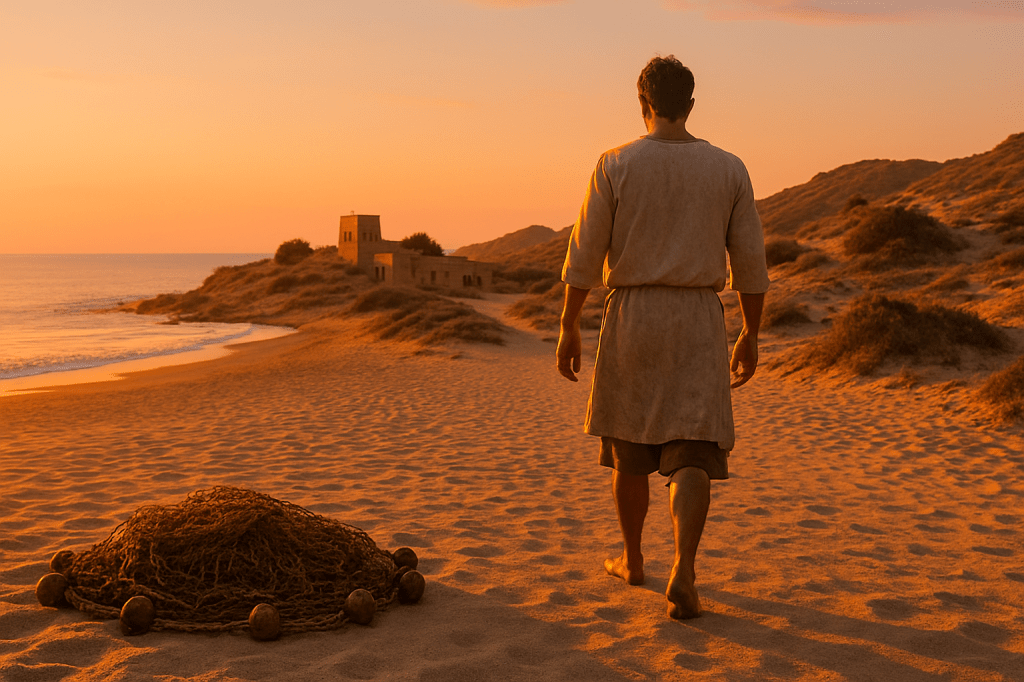
When the fishermen of Galilee heard the summons, they responded immediately. Scripture records that they “straightway left their nets, and followed him” (Matthew 4:20). Their livelihoods, identities, and familiar rhythms were tied to those nets, yet something in the call awakened deeper purpose. Luke adds a striking detail: “they forsook all, and followed him” (Luke 5:11). Following began with surrender—letting go so they could step forward.
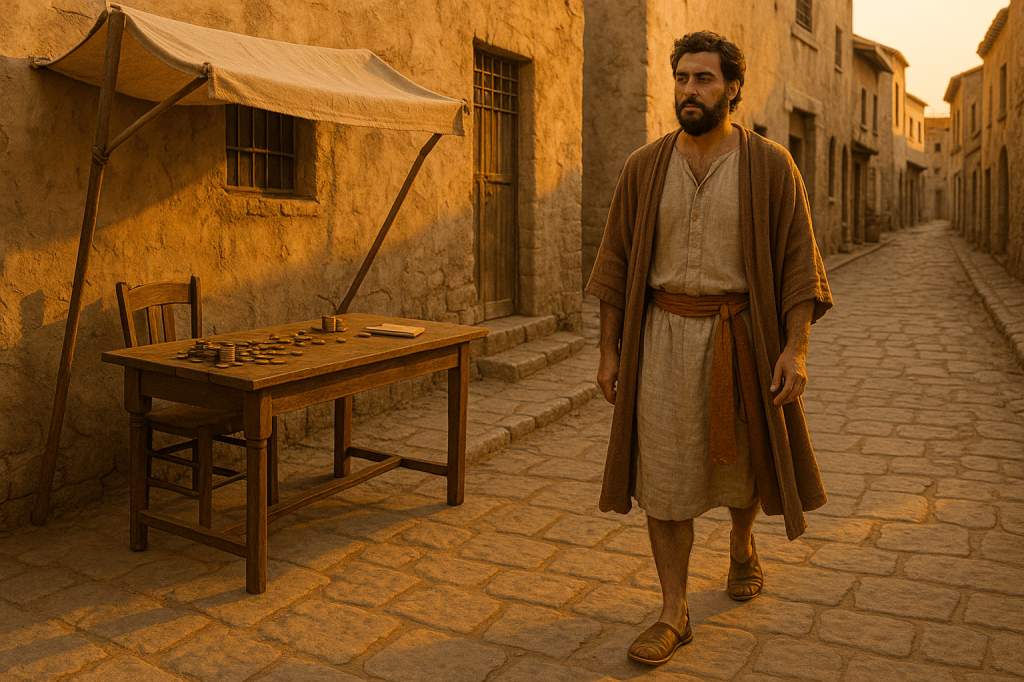
The pattern appears again when Jesus passes by the receipt of custom. Matthew, sitting in the middle of his work, rises at the invitation and begins a new life in a single verse (Matthew 9:9). The Gospels show that the call rarely comes in convenient moments. It interrupts, redirects, and redefines. But it always leads toward clarity. Acts continues this theme as the early believers devote themselves “stedfastly” to the apostles’ doctrine, fellowship, and prayer (Acts 2:42). Following isn’t just a beginning—it’s a way of life.

The beauty of this call lies in its simplicity. No prerequisites, no résumé, no qualifications. Just willingness. The same invitation echoes today, not in audible words from a shoreline, but in Scripture shaping choices, in conviction nudging the heart, and in opportunities requiring courage. Every “yes” forms a stronger neural pathway of obedience, making the next step steadier than the last.

Takeaway: The call to follow is simple, but it reshapes everything—inviting the heart into a life of steady surrender and growing obedience.

-Terrence Burton

Steadfast Hope

Hope isn’t a vague feeling in Scripture—it’s an anchor. The early church clung to it when surrounded by pressures, uncertainties, and trials. Paul consistently tied hope to the character of God, not the condition of life.

The Epistle to the Hebrews describes hope as “an anchor of the soul, both sure and stedfast” (Hebrews 6:19). Anchors matter most when waters grow violent, and Christian hope shines brightest when circumstances darken. This hope is grounded in God’s unchanging promise, confirmed by His oath, and demonstrated in His faithfulness through generations. Paul reinforces this foundation, urging believers to “rejoice in hope; patient in tribulation” (Romans 12:12). Hope fuels endurance.

Peter adds a practical edge, calling believers to be ready to explain the reason for their hope with meekness and fear (1 Peter 3:15). Hope is visible. It shapes perspective. It steadies reactions. It influences choices. When believers demonstrate calm courage in adversity, they testify to the strength of the One who holds them fast. And in seasons of delay, hope guards the heart from the drift toward discouragement.

Paul again emphasizes that “we are saved by hope” and that hope seen is not hope at all (Romans 8:24–25). Hope looks forward, trusting that God is at work even when the present feels incomplete. It trains the believer’s attention toward what God has promised rather than what circumstances suggest. Hope isn’t naive optimism—it’s a steady confidence in God’s outcome.

Takeaway: Hope anchored in God keeps the soul steady when everything else shifts.

-Terrence Burton

Bold Trust

When Scripture calls believers to trust in the Lord, it isn’t asking for blind optimism—it’s inviting a confidence rooted in God’s proven character. Trust grows strongest when circumstances give us no earthly reason to lean on ourselves.

Proverbs reminds us that trust is not a sidebar virtue—it is central to a life shaped by God. “Trust in the LORD with all thine heart” (Proverbs 3:5–6, KJV) isn’t merely advice; it is a posture of surrender. David echoed this confidence repeatedly, declaring that God is his “strength and shield” (Psalm 28:7). When our steps feel uncertain, God’s Word directs us back to His reliability rather than our own understanding. Trust becomes a daily choice, especially when the path ahead is unclear.

Throughout Scripture, trust shows up as action, not emotion. Abraham stepped out without knowing where he was going (Hebrews 11:8). The early church prayed under persecution with a confidence anchored in God’s sovereignty (Acts 4:29–31). Trust does not mean the absence of fear; it means entrusting our fear to the One who governs all things. Turning our concerns toward Him strengthens the neural pathway of faith, reshaping how we respond to challenges.

One of the most powerful expressions of biblical trust appears in Isaiah 26:3, where God promises perfect peace to the mind that trusts Him. This peace is not passive. It is a steady, resilient calm built on who God is—faithful, unchanging, and attentive to His people. When believers cling to that truth, trust becomes more than a virtue; it becomes a refuge.

Takeaway: Trust matures when we choose God’s stability over our own uncertainty.

-Terrence Burton