Guarding Your Heart

The inner life quietly shapes every outward step. Scripture teaches that the heart is the wellspring of thoughts, decisions, and desires, making it the true battleground of spiritual stability. To guard the heart is to protect what governs the entire course of life.

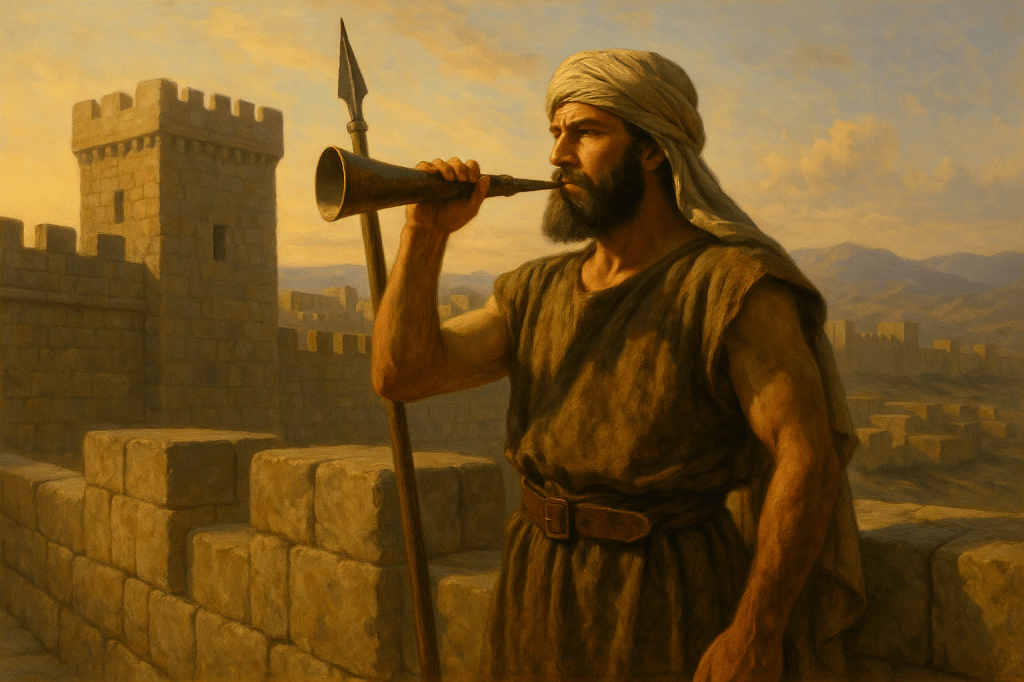
Proverbs offers the central call: “Keep thy heart with all diligence; for out of it are the issues of life” (Proverbs 4:23). The word keep suggests watchfulness—an attentive guarding similar to a city sentinel. What enters the heart eventually grows roots, shaping responses long before a moment of pressure arrives. This makes diligence essential, not optional.

The psalmist understood this deeply, praying, “Create in me a clean heart, O God; and renew a right spirit within me” (Psalm 51:10). Guarding the heart requires more than human discipline; it requires divine renewal. When David prayed for a clean heart, he wasn’t asking for a surface adjustment but a complete realignment of his inner life. His words remind us that guarding and cleansing are intertwined.

Jesus also highlighted the heart’s central role in shaping words and actions. He said, “A good man out of the good treasure of the heart bringeth forth good things” (Matthew 12:35). What we treasure—what we allow to settle and dwell within—eventually becomes visible. Likewise, Paul counseled believers to let “the peace of God rule in your hearts” (Colossians 3:15), showing that the guarded heart is not tense but anchored, ruled by peace rather than turmoil.

Guarding the heart is not isolation from the world but alignment with God. It is the daily choice to protect the inner life from corrosive influences and to fill it with truth, peace, and righteousness. What is cultivated within becomes strength without.

Takeaway: A guarded heart becomes a steady life, shaped by truth, renewed by God, and anchored in peace.

— Terrence Burton

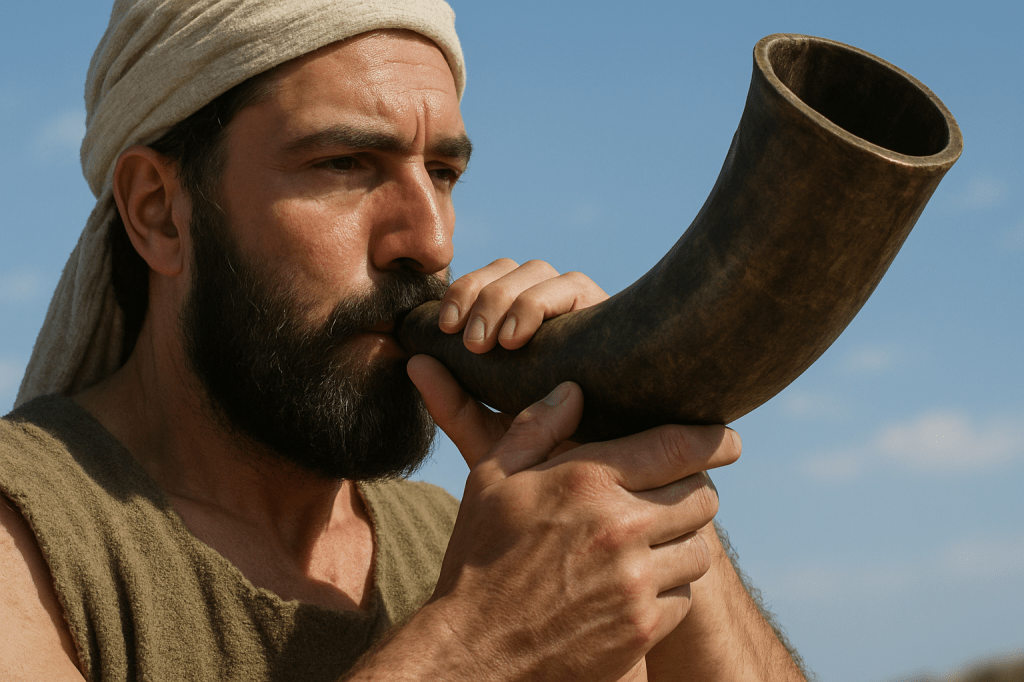
The Watchman’s Call

A watchman lives with alertness woven into his purpose. Scripture uses this image to describe those who stay spiritually awake, attentive to God’s Word, and responsive to His warnings. The prophetic writings remind us that vigilance is not fear-driven—it is faithful stewardship of what God reveals.

Ezekiel received one of the clearest pictures of this role. God told him, “Son of man, I have made thee a watchman unto the house of Israel” (Ezekiel 3:17). A watchman doesn’t control the horizon; he simply stays awake to it. The call is to hear the word at God’s mouth and give warning when needed. This responsibility highlights the seriousness of responding to God’s truth—silence can harm, but faithful speech preserves.

Isaiah adds another layer, showing that watchmen also look for God’s movements, not only danger. “Thy watchmen shall lift up the voice… for they shall see eye to eye, when the LORD shall bring again Zion” (Isaiah 52:8). Here the watchmen rejoice as God restores His people. Spiritual vigilance includes recognizing moments of God’s mercy and redemption, celebrating His work rather than merely scanning for trouble.

Habakkuk echoes this posture of expectancy: “I will stand upon my watch… and will watch to see what he will say unto me” (Habakkuk 2:1). He waits—not with impatience, but with disciplined attentiveness. In times of uncertainty, the watchman’s stance becomes a symbol of trust. God’s reply assures him that the vision will come in its appointed time, and that the just shall live by faith (Habakkuk 2:3–4).

Takeaway: A watchman’s strength is steady attentiveness—he listens, waits, and responds to God with faithful clarity.

-Terrence Burton

How the Fear of God Transforms Everyday Decision‑Making

Embracing the Fear of the LORD in Wisdom

The journey of living wisely begins with a simple yet profound foundation: the fear of the LORD. In the often‑noisy rhythms of daily life, this foundational posture invites calm discernment and a steady heart in the face of shifting circumstances.

In Proverbs we read that “The fear of the LORD is the beginning of knowledge: but fools despise wisdom and instruction.” (Prov 1:7 KJV)  To “fear” here carries the sense of awe, reverence and respectful submission to God’s authority—not terror, but wise recognition. As we anchor our decisions in that fear, wisdom begins to weave into our lives. Later the text affirms “Understanding is a wellspring of life unto him that hath it: but the instruction of fools is folly.” (Prov 16:22 KJV)  A life oriented around reverence toward God produces lasting benefit; ignoring that reverence leads to folly.

Wisdom literature consistently contrasts the wise and the foolish, the one who listens and the one who rejects. For instance: “My son, hear the instruction of thy father, and forsake not the law of thy mother…” (Prov 1:8 KJV)  Then that call continues: “Whoso hearkeneth unto me shall dwell safely, and shall be quiet from fear of evil.” (Prov 1:33 KJV)  In both a moral and a spiritual sense, wisdom begins with hearing, then choosing to walk in the truth. For you and me—this means that “fear of the LORD” isn’t merely theological jargon, but the principle that governs how we train our hearts, make decisions, and perceive the world around us.

It also brings practical clarity: when we respect God’s standard, we avoid destructive paths. “My son, if sinners entice thee, consent thou not.” (Prov 1:10 KJV)  Doing so keeps us from the net of evil and offers a path of peace. Wisdom offers stability and purpose; the fear of the LORD gives us that stability at the root.

Takeaway: Cultivating reverent fear of the LORD is the root from which wisdom grows and life flourishes.

— Terrence Burton

RUNNING WITHOUT WEIGHTS

(Originally written on June 14, 2016)

Great peace have they who love your law, and nothing can make them stumble.

Psalms 119:165 (NIV)

Note: This verse highlights a foolproof system. All I have to do is love God’s principles and nothing in the universe has the capacity to cause me to stumble. I can only stumble if my love for the law is unstable. This harmonizes with Paul’s statement that “love never fails.” Love, therefore, has a stabilizing factor about it.

  • Love (man’s part)
  • Peace (God’s part)
  • Eternal Stability (when God’s part and man’s part meet)

Therefore, since we are surrounded by such a great cloud of witnesses, let us throw off everything that hinders and the sin that so easily entangles, and let us run with perseverance the race marked out for us.

Hebrews 12:1 (NIV)

Note: This passage is about letting go of things that interfere with your race. This verse comes on the heels of Hebrews Chapter 11. Chapter 11 talks about the things that were obtained, but beneath the surface, it talks about the things that were let go of in order to run the “heroes” of the faith race. For example, Enoch, let go of his ties to planet Earth. Abraham and Sarah laid aside their family. Others laid aside peace with ungodly people. Moses for example, forsook royalty for the sake of being a deliverer for his people. They all had to let go of something in order to grab what the Father had for them. So the real question that immediately follows “What do I want?” is “Am I willing to walk away from something in order to walk into what the Father has provided for me?” What am I willing to relinquish so that I can run?”

I went back and re-read Hebrews chapter 11 with fresh eyes and here’s what I saw. In verse 24, it says about Moses, “When he had grown up, refused…” Immediately this showed me that refusal is a mark of maturity and faith. If he had not grown up, he may possibly have accepted what he refused.

As I’m typing, another example came to mind. Joseph refused Potiphar’s wife. Why? Because he was grown up. Joseph made a grown man’s decision and refused to have sex with another man’s wife.

A grown man is known by what he refuses to have in his life as much as by what he chooses to have in his life. In fact, although Moses refused to be called the son of Pharaoh’s daughter. He chose rather to suffer with his people. This was definitely a grown man’s decision.

Other Examples in Scripture:

  1. The Hebrew boys refused the king’s food.
  2. The Hebrew boys refused to bow to an idol god.

Another observation I made with Hebrews 12:1 is that we are advised to throw things off solely on the bases of them hindering us. It doesn’t matter if it’s fun, enjoyable and we like it. The only real question is, “Is it hindering me from running my race?” If so, it must be discarded. I can clearly see where our error has been. We have allowed things to remain in our lives that in some way hinder us from progressing. We have focused so much in our day on getting things, but we have talked very little about what must be refused.

Note: As I was typing, I pondered what these verses listed above have to do with each other. Then I saw it. They are both about the ability to function without stumbling or being hindered. Psalms 119:165 highlights God’s principle of stability and Hebrews 12:1 lets us know we have to lay aside things that hinder our progress so that we can run the race that has been marked out for us.